
North Hollywood Insulation Contractor for Cooler Summers and Lower Bills
When it's 104 °F on Lankershim, a shallow North Hollywood attic can hit 150 °F or more, and that heat doesn't stay up there. It pushes through thin, decades-old insulation into your bedrooms, so the AC runs past midnight and your LADWP bill climbs into the top tier. Most NoHo homes were built in the 1950s with a few inches of rock wool that's since been flattened by time and roof rats. NoHo Insulation Pros fixes that. We remove what's failing, seal the air leaks, and install insulation sized for Climate Zone 9, so your home finally holds its temperature.
We work in Valley heat every summer, and we know the homes here: low-pitch postwar ranches in Valley Village, raised-floor bungalows near Toluca Lake, stucco boxes in Valley Glen, and garage-to-ADU conversions all over the Lankershim corridor. We know where the soffit baffles are usually missing, which attics are likely to hide vermiculite, and how to keep aircraft and freeway noise out of a home studio. Whether it's a single attic top-up or a full tear-out and replacement, we'll explain the options clearly and leave your home clean.
- ✓Bonded
- ✓Fully insured
- ✓Financing available
- ✓Free consultation
- ✓Serving a 20-mile radius around North Hollywood
- ✓Climate Zone 9 attic and Title 24 know-how
Request Your Free Estimate
No obligation. Fast, honest quotes.
Thank you — your request was sent!
A member of the NoHo Insulation Pros team will reach out shortly. Need help now? Call (818) 477-1218.
Why North Hollywood Homes Need Better Insulation
North Hollywood isn't coastal LA. The Santa Monica Mountains block the ocean breeze, the summers run hot, and much of the housing went up before anyone worried about energy codes. Put those together and insulation stops being a nice extra. It's what decides whether a NoHo home stays comfortable.
Valley Heat, Cold Nights, and Santa Ana Dust
North Hollywood sits at roughly 600–800 feet in the southeastern San Fernando Valley. July and August highs average in the mid-90s, and heat waves routinely top 100–110 °F. Nearby Woodland Hills hit 121 °F in 2020. Under that sun, roof decks and attics reach 140–160 °F, and an under-insulated ceiling radiates that heat into your rooms well after sunset. Winter swings the other way, with nights in the low-to-mid 40s that you'll feel through bare stucco walls and uninsulated raised floors. Rain is light at about 15–17 inches a year, but atmospheric-river storms can still soak attic insulation through aging roofs. In fall, Santa Ana winds blow dust and wildfire smoke through every unsealed top plate and recessed light. That's why air sealing matters as much as R-value here.
Postwar Housing Built Before Energy Codes
Most NoHo homes date from the late 1940s through the 1960s: single-story wood-frame ranches with stucco walls, low-pitch roofs, and attics so shallow you can barely kneel in them. Many were built with no wall insulation and only a few inches of rock wool or loose fill overhead. Decades later, that fill has compacted and is often fouled by roof rats or pigeons. Pre-1950s Spanish Revival homes and bungalows usually sit on raised foundations with drafty crawlspaces. Ductwork snakes through the hot attic, often leaky and thinly wrapped. Homes built before 1980 can also hide vermiculite, asbestos-wrapped ducts, or popcorn ceilings. Add 1960s–80s dingbat apartments, newer mid-rise buildings in the Arts District, and a wave of ADUs built since 2017, and you've got a wide range of building types. Each one needs its own approach.
LADBS Permits, Title 24, and Climate Zone 9 Rules
North Hollywood falls under the City of Los Angeles, so LADBS handles permits. California's Title 24 Part 6 energy code applies to additions, alterations, and ADUs, and Climate Zone 9 carries tougher attic insulation and duct requirements than the coast does. R-38 is the recommended attic target, and many NoHo attics test far below it. If you replace or alter HVAC equipment, you'll typically need duct leakage testing verified by a HERS rater. Suspect materials in pre-1980 homes must be tested, and any abatement falls under SCAQMD Rule 1403 and Cal/OSHA. In pre-1978 homes, lead-safe RRP practices apply. The 2025 Title 24 cycle keeps tightening envelope standards. LADWP and SoCalGas rebates come and go, so check what's currently offered before you start a project.
A Creative, Noise-Conscious Community
North Hollywood is home to roughly 75,000–90,000 people, and a lot of them work in entertainment, a short drive from Universal, Warner Bros., Disney, and the Burbank studios. Home studios, podcast rooms, and edit bays are common. They have to contend with jets on approach to Hollywood Burbank Airport, traffic on the 170, 101, and 134, and Arts District nightlife, which is why acoustic insulation is so popular here. Long-time owners are investing in comfort and resale value, ADU builders want rental-ready units that pass inspection, and small landlords need upgrades that actually pay back.
Common Insulation Problems in North Hollywood Homes
Most of the insulation problems we see in North Hollywood come from the same few causes: postwar construction, Valley heat, rodents, and ducts that run through hot attics. Here's what to look for, why it happens here so often, and how serious each problem usually is. Some can wait a season. Others shouldn't.
Compacted, Under-R-Value Attic Insulation Moderate
The original attic insulation, usually a few inches of rock wool or loose fill, has settled over 60-plus years into a thin, matted layer. Today it might deliver R-8 to R-13, when Climate Zone 9 homes should be at roughly R-38.
Why it's common hereMost NoHo ranch homes were insulated to 1950s standards, when there were no energy codes to meet. Decades of summer attic temperatures in the 140–160 °F range, roof work, and cable installers crawling through have crushed the fill further. Low-pitch roofs leave little depth to build up insulation, and earlier homeowners often skipped the attic entirely because it's so cramped. On a 105 °F afternoon, the result is a ceiling that radiates heat like a stovetop and an AC that can't keep up under LADWP tiered rates.
Signs you'll notice- Ceilings feel warm to the touch on summer afternoons
- Rooms stay hot until 10 or 11 p.m.
- You can see ceiling joists poking above the insulation
- Summer electric bills jump into higher LADWP tiers
- AC runs almost nonstop during heat waves
- Uneven temperatures from room to room
This is nearly universal in late-1940s to 1960s ranches across Valley Village, Valley Glen, and the residential blocks off Magnolia and Burbank Boulevards. Rear bedrooms and rooms under west-facing roof slopes tend to suffer the most from July through September.
Our fix: Air seal the attic floor, install baffles at the eaves, then blow in fiberglass or cellulose to R-38 or higher, sized for the attic's depth and ventilation.
Rodent-Contaminated Attic Insulation Serious
Roof rats, mice, or pigeons have nested in the attic and left droppings, urine, tunnels, and nesting debris in the insulation. Contaminated insulation loses R-value, smells, and can carry pathogens that drift into living spaces through gaps in the ceiling.
Why it's common hereNorth Hollywood's mature citrus trees, palms, and dense backyard landscaping give roof rats easy highways to the roofline. Older homes often have torn vent screens, gaps at the eaves, and unsealed roof penetrations. Warm, quiet attics with soft loose-fill insulation make ideal nesting sites. Pigeons are a recurring issue near commercial corridors like Lankershim. Once rodents settle in, they tunnel through the insulation and compact it, and the urine smell can come through ceiling fixtures on hot days.
Signs you'll notice- Scratching or scurrying overhead at night
- Droppings on the attic floor or in the insulation
- Musty or ammonia-like odor in upstairs rooms
- Tunnels or flattened trails in the insulation
- Chewed wiring or duct jackets
- Torn eave or gable vent screens
We see this most in homes with fruit trees and overhanging palms, especially in Valley Glen, Toluca Woods, and older blocks near the Tujunga Wash. Activity picks up in late fall, when cooler nights push rodents indoors.
Our fix: Vacuum out contaminated insulation, sanitize the attic, seal rodent entry points and vents, then install fresh insulation to current R-value targets.
Leaky, Poorly Insulated Attic Ductwork Moderate
Supply and return ducts running through the hot attic have loose joints, torn foil wrap, or thin insulation. Cooled air leaks out before it reaches your rooms, and attic heat soaks into the air that does arrive.
Why it's common hereCentral AC was retrofitted into most NoHo homes long after construction, often with ducts strung through cramped attics with little care. When the attic sits at 150 °F, even small leaks waste a lot of energy. Duct tape dries out and fails in that heat. The 1994 Northridge quake and smaller tremors since have shaken connections loose. Title 24 now requires duct leakage testing in Climate Zone 9 when HVAC equipment is replaced, which often reveals just how leaky these systems are.
Signs you'll notice- Weak airflow at far registers
- Some rooms never cool down
- Dusty air or dust streaks around registers
- Torn, crushed, or disconnected duct sections in the attic
- Higher bills with no change in thermostat settings
Common in single-story ranches with low-pitch roofs throughout Valley Village and Sun Valley, and in homes that added AC during the 1970s–90s. Problems tend to show up right before or during the first big heat wave in June.
Our fix: Seal and reinsulate accessible duct runs, then bury ducts under new attic insulation where practical. We'll coordinate around any HERS testing your HVAC work requires.
Suspected Vermiculite or Asbestos-Era Materials Emergency
Pebbly, gray-brown or gold vermiculite loose fill, or white wrap on old ducts, may contain asbestos. Disturbing it, even by crawling through the attic, can release fibers into your home.
Why it's common hereMost of North Hollywood's housing stock was built before 1980, when vermiculite and asbestos duct wrap were common building materials. Owners usually find it during remodels, ADU additions, or when they finally decide to upgrade a hot attic. Southern California regulations under SCAQMD Rule 1403 and Cal/OSHA require testing before disturbance and licensed abatement if asbestos is confirmed. That's not something to skip, especially in homes where kids or older family members live.
Signs you'll notice- Granular, lightweight pebbles in the attic that look like mica
- White or gray papery wrap on old ductwork
- Popcorn ceilings in a pre-1980 home
- Original insulation that's never been replaced
- Upcoming remodel, ADU, or HVAC work
Most likely in 1940s–1970s homes throughout NoHo, Valley Village, Studio City, and Van Nuys, and especially in houses that have never had a major remodel since they were built.
Our fix: Stop work and don't disturb it. Arrange testing. If asbestos is confirmed, licensed abatement comes first, and then we install new insulation.
Cold, Drafty Raised Floors Minor
The floors of raised-foundation homes have no insulation underneath, so cold crawlspace air chills the floorboards and leaks up through gaps around plumbing and floor penetrations.
Why it's common herePre-1950s Spanish Revival homes and bungalows in North Hollywood were commonly built on raised foundations with vented crawlspaces and nothing under the subfloor. When winter nights fall into the low 40s, hardwood floors turn icy and your heater works overtime. Santa Ana winds force dust up through the same gaps. Rodents and moisture from winter storms can also damage what little insulation was ever installed down there.
Signs you'll notice- Floors cold enough that you need slippers
- Drafts near baseboards and floor registers
- Higher SoCalGas bills in winter
- Musty smell from below
- Fallen or sagging batts in the crawlspace
- Dust or debris on the floors after windy days
Most common in older pockets near Toluca Lake, Studio City's Colfax Meadows, and pre-war blocks of Valley Village. The problem is most noticeable from December through February.
Our fix: Seal floor penetrations, then install properly supported batts or spray foam between floor joists, along with rodent-proofing at crawlspace vents.
Uninsulated Stucco Walls Minor
Exterior walls were built with empty stud cavities behind the stucco and plaster. They transfer heat in summer and lose it in winter, and they let outside noise straight in.
Why it's common herePostwar builders across the Valley rarely insulated walls. Stucco and lath make the walls hard to open, so few owners ever retrofitted them. West-facing walls absorb hours of afternoon sun and release that heat indoors into the evening. For homes near the 170 or under BUR flight paths, empty walls also amplify traffic and aircraft noise.
Signs you'll notice- Interior walls warm to the touch on summer evenings
- Cold exterior walls in winter
- Traffic or aircraft noise easily heard inside
- Outlets on exterior walls feel drafty
- No insulation visible when you remove an outlet cover
Typical in 1950s ranches and minimal-traditional homes across North Hollywood and Sun Valley, and most noticeable on west-facing bedrooms and homes close to the 170 freeway or Lankershim Boulevard.
Our fix: Use drill-and-fill blown-in insulation through small holes, patched and color-matched where practical, or insulate the cavities during a remodel while the walls are open.
Noise Leaks Into Home Studios and Bedrooms Moderate
Sound from aircraft, freeways, and nightlife gets through thin walls, ceilings, and uninsulated cavities. That makes recording difficult and sleep worse, and it cuts into the value of a home office.
Why it's common hereNorth Hollywood sits under approach paths to Hollywood Burbank Airport and near the 170, 101, and 134 freeways. Lankershim and Magnolia carry heavy traffic, and the Arts District stays busy late. With so many residents in entertainment, it's common to see spare bedrooms and converted garages turned into podcast rooms and edit bays. Empty wall and ceiling cavities act like drums, so outside noise ends up in the recording.
Signs you'll notice- Jet noise audible in recordings
- Traffic hum in bedrooms at night
- Sound travels between rooms or units
- Echo-prone converted garage spaces
- Neighbors complain about your playback
In high demand near the Arts District, Universal City, Toluca Lake, and Magnolia Park, and in garage-to-studio conversions throughout the residential pockets off Burbank Boulevard.
Our fix: Fill wall, ceiling, and floor cavities with dense acoustic insulation, seal sound leaks, and combine the insulation with any decoupling or drywall upgrades your project calls for.
Insulation Services Built for North Hollywood Homes
Every service below is planned around the same conditions: Valley summer heat, shallow attics, older construction, and Title 24 rules. We don't sell one product to every house. We figure out what your home actually needs, explain the trade-offs, and install it properly so it holds up through many summers.
Attic Insulation ⭐ Specialty
We bring under-insulated North Hollywood attics up to Climate Zone 9 targets, usually R-38 or higher. That means sealing the attic floor first, then adding insulation evenly across every bay, including the hard-to-reach eaves.
Our approachWe seal top plates, recessed cans, and penetrations, install eave baffles to keep soffit vents open, and dam the attic hatch. Then we blow fiberglass or cellulose to a measured depth. Depth markers let you confirm the R-value yourself.
In North Hollywood, CALow-pitch NoHo ranches leave only inches of clearance at the eaves, which is where heat gain is worst. We work carefully in those tight edges, keep attic ventilation working, and bury leaky ducts where we can so they stop picking up 150 °F attic heat.
Best for: Homeowners with hot bedrooms, high summer bills, or thin original insulation. It's especially worthwhile for postwar single-story homes in Valley Village, Valley Glen, and Sun Valley.
Spray Foam Insulation ⭐ Specialty
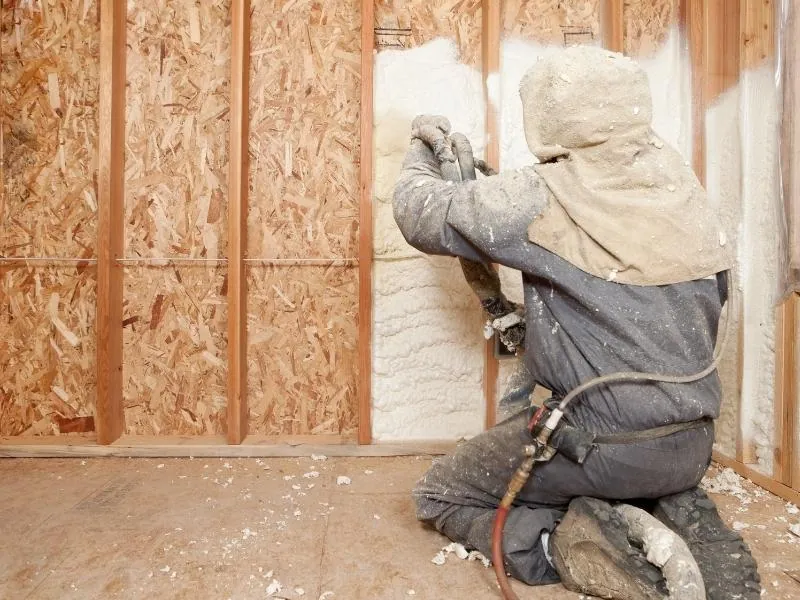
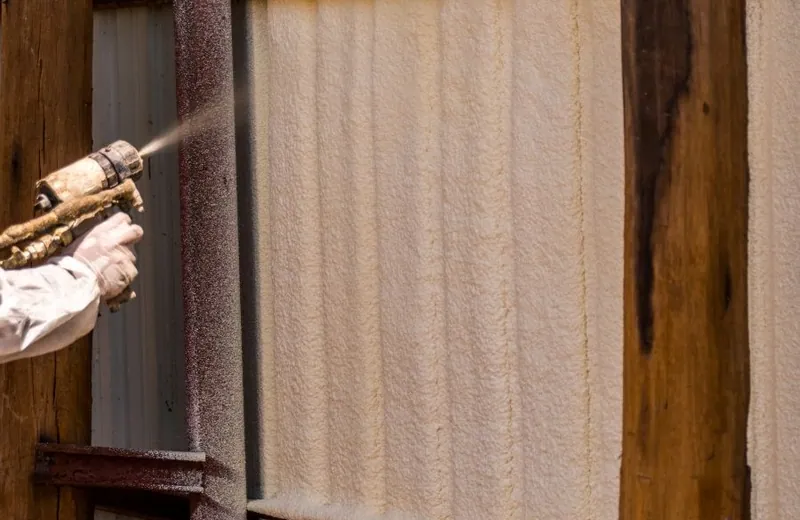
We apply open-cell or closed-cell spray foam to roof decks, walls, rim joists, and crawlspaces. It insulates and air-seals in one step, which helps a lot against both Valley heat and Santa Ana dust.
Our approachWe match the foam type to the job. Open-cell works well for sound control and roofline insulation, while closed-cell suits higher R-value per inch and moisture resistance. We mask, ventilate, and protect your home during application, then trim and clean up.
In North Hollywood, CASpray foam fits the spaces NoHo homes are full of: shallow attics, vaulted ceilings, ADUs, and garage conversions. It helps meet Title 24 in tight framing, and it seals the gaps that let wildfire smoke and dust in.
Best for: Vaulted or cathedral ceilings, ADUs, home studios, rim joists, and owners who want maximum air sealing in a small space.
Blown-In Insulation
We install loose-fill fiberglass or cellulose in open attics and use drill-and-fill to dense-pack enclosed wall cavities. It's one of the most cost-effective ways to raise R-value in older homes.
Our approachFor attics, we blow insulation to an even, measured depth. For walls, we drill small holes, dense-pack each cavity so it won't settle, then plug and patch. We check each cavity so we don't leave voids.
In North Hollywood, CADrill-and-fill is one of the few practical ways to insulate NoHo's empty stucco walls without tearing them out. It cuts afternoon heat on west-facing rooms and reduces freeway and aircraft noise.
Best for: Budget-conscious attic top-ups, uninsulated stucco walls, rental properties, and small landlords looking for upgrades that pay back.
Insulation Installation
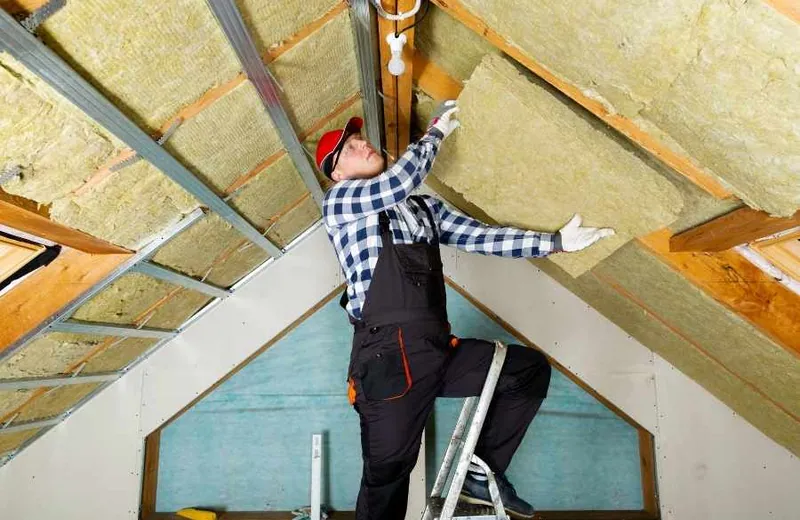
We handle new installations in additions, remodels, ADUs, garage conversions, and open walls, using batts, blown-in, or spray foam depending on what the space and the energy code call for.
Our approachWe check framing depth, plan the R-values to meet Title 24, and install batts cut neatly around wiring and boxes with no compression or gaps. We'll document the work so it's ready for inspection.
In North Hollywood, CANorth Hollywood's ADU boom means a lot of garage conversions that have to meet Climate Zone 9 insulation rules before LADBS will sign off. We know what inspectors look for and build to it from the start.
Best for: ADU builders, remodels, room additions, home studios, and any project with open walls, ceilings, or floors.
Crawl Space Insulation
We insulate underneath raised floors and seal the gaps that let cold air, dust, and pests up into your home, so winter floors feel warmer.
Our approachFirst we clear out fallen or damaged batts. Then we seal plumbing and floor penetrations and install batts with proper supports, or spray foam between joists. We screen or repair vents to keep rodents out.
In North Hollywood, CAPre-1950s bungalows and Spanish Revival homes near Toluca Lake and Studio City often have bare, drafty subfloors. On 40-degree winter nights, under-floor insulation makes a real difference to comfort and gas bills.
Best for: Raised-foundation homes with cold floors, high winter heating bills, or rodent activity underneath.
Insulation Removal
We remove old, compacted, wet, or rodent-contaminated insulation using commercial vacuum equipment, then clean and sanitize the attic so it's ready for fresh material.
Our approachHigh-powered vacuum hoses run from the attic straight to sealed collection bags outside, so debris doesn't travel through your house. We protect floors and walkways, sanitize surfaces, and seal rodent entry points.
In North Hollywood, CARoof rats are a constant problem in NoHo's tree-lined neighborhoods. Before any removal in a pre-1980 home, we check for suspect vermiculite and won't disturb it until it's been tested and cleared.
Best for: Attics with droppings, odors, water damage from winter storms, or insulation too compacted to be worth topping up.
Insulation Replacement
This is a full reset: we remove the failing insulation, sanitize, rodent-proof, air seal, and install new insulation that meets current Climate Zone 9 targets.
Our approachWe combine our removal and installation steps into one coordinated project, add duct sealing and baffles where needed, and finish with a walkthrough and photos so you can see the before and after.
In North Hollywood, CAFor many 1950s NoHo homes, adding new insulation on top of contaminated fill only hides the problem. A complete replacement fixes heat, odor, and air quality together, which helps a lot during wildfire-smoke season.
Best for: Homeowners preparing to sell, new buyers, and anyone dealing with contamination, smell, or decades-old insulation.
Our Insulation Process, Step by Step
There aren't any surprises in how we work. You'll know what we found, what we recommend, what it costs, and when we'll be there, from the first attic inspection through the final walkthrough.
Free Consultation & Attic Inspection
- We inspect the attic, crawlspace, and accessible ducts
- We measure existing insulation depth and estimate its R-value
- We check for rodent activity, moisture, and air leaks
- We flag suspect pre-1980 materials for testing
Local note: In tight, low-pitch NoHo attics, we'll take photos so you can see conditions you'd never crawl in to check yourself.
Clear Recommendations & Written Estimate
- We lay out options from a basic top-up to full replacement
- We itemize pricing with no vague lump sums
- We note Title 24, LADBS permit, or HERS requirements if they apply
- We review financing options if you want them
Local note: We'll point you toward current LADWP or SoCalGas programs to check, since availability changes.
Preparation & Protection
- We lay floor coverings along every work path
- We seal off attic access points inside the home
- We stage equipment outside to limit indoor traffic
- We confirm that any required testing or abatement is complete
Local note: In summer we start early to avoid the worst attic heat, which keeps the crew safe and the work careful.
Removal, Sealing & Installation
- We remove and bag old insulation if needed
- We sanitize and seal rodent entry points
- We air seal top plates, cans, and penetrations, then install baffles
- We install insulation to the target R-value
Local note: We pay close attention to the eaves and duct runs, where most of the heat gain in Valley attics happens.
Final Walkthrough & Cleanup
- We show you before-and-after photos and depth markers
- We clean every work area thoroughly
- We review any permit or inspection next steps
- We answer questions and leave you our contact info
Local note: You'll usually feel the difference by the next hot afternoon, when the ceilings stay cooler and the AC cycles less often.
Why North Hollywood Homeowners Choose NoHo Insulation Pros
We Know Valley Heat and Valley Homes
Insulating a beach bungalow isn't the same as insulating a 1955 ranch in Valley Village that bakes at 105 °F all of August. We work in North Hollywood and the surrounding Valley, so we know what to expect before we climb the ladder: shallow attics, missing eave baffles, rodent-fouled rock wool, and ducts leaking cool air into a 150-degree attic. That local experience means we recommend what actually fixes the heat problem rather than a one-size package that looks good on paper and does little.
Bonded and Insured for Your Protection
NoHo Insulation Pros is bonded and insured. If something unexpected happens on your property, you're protected and not left holding the bill. Attic work means people moving above your ceilings, in tight spaces, around wiring and ductwork, so coverage matters. Whoever you hire for insulation work in California, it's smart to ask for proof of insurance and to verify the contractor's license on the CSLB website. We're happy to answer those questions plainly.
Insulation Is All We Do
We focus on insulation installation, spray foam, and attic insulation, plus the removal, replacement, blown-in, and crawlspace work that goes with it. Because we specialize, we know the details that separate a good job from a mediocre one: dense-packing walls so they don't settle, keeping soffit vents clear, sealing recessed cans before covering them, and choosing open-cell or closed-cell foam for the right reasons. We're not a handyman adding insulation to a long list of services.
Clear Communication, Start to Finish
You'll never wonder what's happening in your attic. We show you photos of what we find, explain your options in plain language, and give you a written estimate that spells out each line item. If we spot something we're not the right people for, like suspect vermiculite that needs testing, we'll tell you directly and explain the next step. Our customers say the process feels simple, and that's exactly what we're aiming for.
We Respect Your Home
Insulation work can get messy fast. We lay down floor protection, seal attic openings inside the house, and run removal hoses directly outside to sealed bags so debris doesn't drift through your rooms. We work efficiently in tight attics, clean up thoroughly, and leave your home the way we found it, only more comfortable. If you've got kids, pets, or a home studio full of gear, we'll plan the job around that.
Financing That Makes Upgrades Possible
A hot summer isn't the time to put off fixing an attic because the budget's tight. We offer financing so you can move forward now and spread the cost out, while lower LADWP bills offset part of the payment. We'll also point out current LADWP and SoCalGas programs worth checking. Rebates change often, so it pays to look before you start, and we'll factor anything that applies into your planning.
Free Consultations Across a 20-Mile Radius
We serve homeowners, landlords, and ADU builders within 20 miles of North Hollywood, from the Arts District and Toluca Lake to Sherman Oaks, Burbank, and Van Nuys. Your first consultation is free, including the attic inspection and a written recommendation. There's no pressure. You'll get an honest read on your home's insulation and a clear idea of what it would take to fix it, whether you hire us or not.
Local, Protected, and Focused on Insulation
Bonded • Insured
Insulation Services in North Hollywood and Nearby Neighborhoods
We're based around North Hollywood and work throughout the southeastern San Fernando Valley and its edges. These neighborhoods share the same Valley heat but differ in housing stock, from postwar ranches to Arts District apartments and pre-war bungalows.
North Hollywood Core
South & Studio Neighborhoods
East & North Valley
We serve homes and small multifamily properties within a 20-mile radius of North Hollywood. Not sure if you're in range? Reach out and we'll confirm. Not sure if we cover your area? Call (818) 477-1218.
How Much Does Insulation Cost in North Hollywood?
Insulation costs in North Hollywood depend on your home's size, what's already in the attic, and how hard the space is to work in. The ranges below are typical for the LA market. After your free inspection, you'll get an exact, itemized quote.
Removal and Contamination Primary Factor
Whether old insulation has to come out is often the biggest swing in price. Clean, intact insulation can usually be topped up. Rodent-fouled, water-damaged, or badly compacted fill needs vacuum removal, sanitizing, and rodent proofing first, which can add $1.50–$3.00 per square foot. If suspect vermiculite turns up, testing and licensed abatement are separate costs that have to happen before any other work.
Insulation Type Primary Factor
Blown-in fiberglass or cellulose is the most economical choice for open attics. Batts are similar in cost for open framing. Spray foam costs more per square foot, with closed-cell above open-cell, but it insulates and air-seals at once, which can make it the better value for vaulted ceilings, ADUs, and studios. We'll explain which type makes sense for your space, not just which one costs more.
Square Footage and Target R-Value Secondary Factor
A 1,200-square-foot NoHo ranch costs far less to insulate than a 2,500-square-foot Sherman Oaks home. The R-value target also matters. Getting from R-11 to R-38 takes more material than topping up from R-30. Wall drill-and-fill is priced by wall area and the number of cavities rather than attic floor area.
Access and Attic Conditions Secondary Factor
Low-pitch roofs, tiny hatches, and crowded duct runs slow the work down. Tight eaves often need hand placement of baffles and insulation. Second-story attics, crawlspaces with limited clearance, and homes with heavy ductwork all add labor time. Summer scheduling also affects how long a crew can safely work in the attic each day.
Add-Ons: Air Sealing, Ducts, and Permits Additional Factor
Air sealing top plates and recessed lights, sealing or reinsulating ducts, adding radiant barriers, and rodent-proofing vents all improve results and add cost. Projects tied to ADUs, additions, or HVAC changes may need LADBS permits and Title 24 documentation or HERS verification, so we'll flag those costs up front.
| Typical project | Details | Estimated range |
|---|---|---|
| Attic top-up on a postwar ranch | 1,300 sq ft Valley Village single-story, existing insulation clean but thin; air sealing, baffles, blown-in to R-38 | $2,400 – $4,500 |
| Rodent-contaminated attic replacement | 1,500 sq ft Valley Glen home; vacuum removal, sanitizing, rodent proofing, air sealing, new blown-in to R-38+ | $5,500 – $10,000 |
| Garage-to-ADU or home studio insulation | 400–500 sq ft conversion; spray foam or batts in walls and ceiling to meet Title 24, with acoustic focus | $4,000 – $9,500 |
| Raised-floor crawlspace insulation | 1,200 sq ft Toluca Lake-area bungalow; remove fallen batts, seal penetrations, install supported floor insulation | $2,500 – $5,500 |
Financing is available, so you can upgrade before the next heat wave and pay over time instead of all at once. In a Climate Zone 9 home, a properly insulated and sealed attic can noticeably cut cooling costs under LADWP tiered rates, make rooms more comfortable, and improve resale appeal. Check current LADWP and SoCalGas programs for rebates that may offset part of the cost.
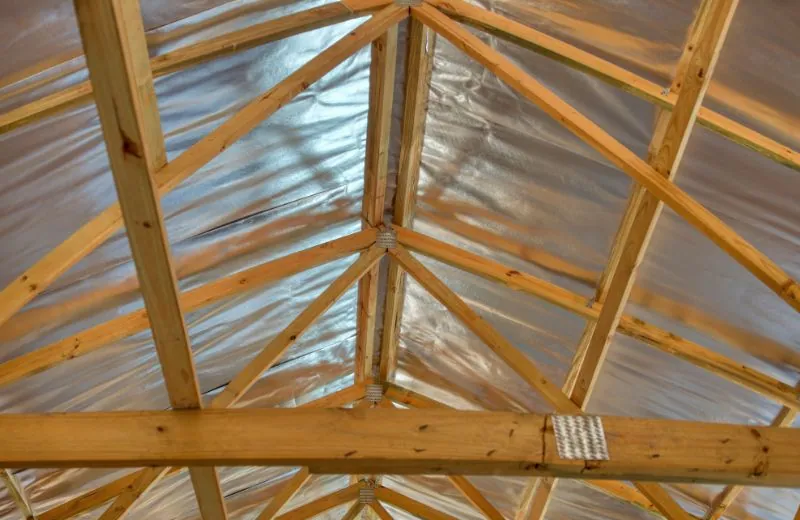
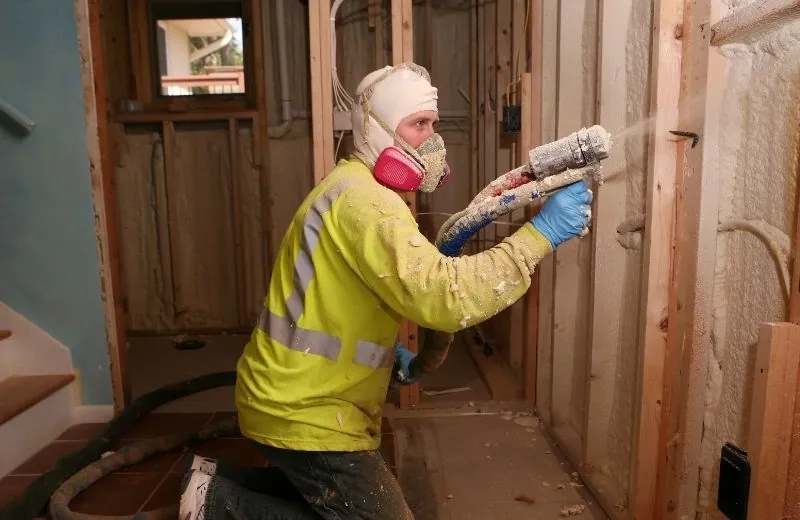
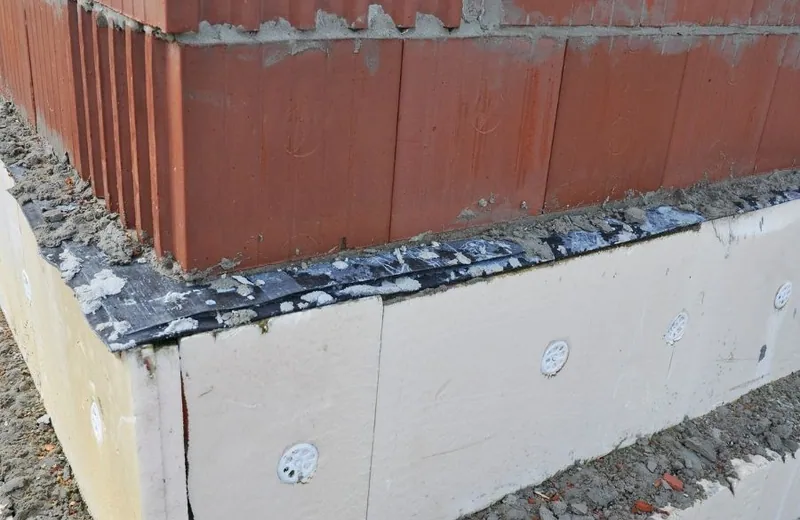
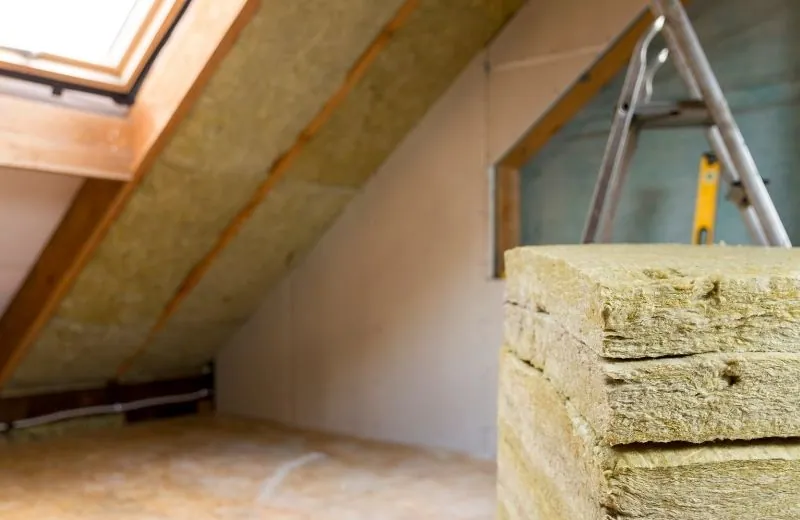
Recent insulation Projects in North Hollywood, CA
North Hollywood Insulation FAQs
How much does attic insulation cost in North Hollywood?
For a typical 1,200–1,500 square foot NoHo home, an attic top-up with blown-in insulation, air sealing, and baffles usually runs about $2,400–$4,500. If the old insulation is rodent-contaminated or badly compacted and has to come out first, a full removal and replacement typically falls between $5,500 and $10,000. Spray foam rooflines cost more. The final price depends on square footage, access, how much air sealing is needed, and any duct work. Our consultation is free, and you'll get an itemized written estimate. Financing is available.
How long does an insulation project take?
Most attic top-ups on single-family North Hollywood homes take one day. Full removal and replacement jobs usually take two to three days, because the old material has to be vacuumed out and the attic sanitized and sealed before new insulation goes in. Crawlspace work is typically one to two days. ADUs, studios, and spray foam projects vary with size and with whether inspections are involved. In summer we start early so the crew isn't working through the worst attic heat, which also keeps the quality up.
Do I need a permit for insulation work in North Hollywood?
It depends on the project. North Hollywood is in the City of Los Angeles, so permits go through LADBS. A simple attic insulation upgrade often doesn't need one, but insulation tied to ADUs, garage conversions, additions, or remodels falls under Title 24 Part 6 energy code and is usually inspected. If you're replacing or altering HVAC equipment, duct leakage testing with HERS-rater verification is typically required in Climate Zone 9. We'll tell you up front what your specific project needs so you don't run into problems at inspection.
How much attic insulation do I need in the San Fernando Valley?
North Hollywood is in California Building Climate Zone 9, where R-38 is the recommended attic target. That's roughly 12–14 inches of blown-in fiberglass, depending on the product. Many postwar NoHo homes are sitting at R-8 to R-13 because the original rock wool has compacted. Shallow, low-pitch attics can make full depth tricky at the eaves, so we use baffles and careful placement to keep ventilation open while getting as close to target as the space allows.
What should I do if I think my attic has vermiculite or asbestos?
Don't disturb it. Vermiculite looks like small gray-brown or gold pebbles, and it was common in homes built before 1980, which describes most of North Hollywood. It can contain asbestos, and stirring it up can release fibers. California rules under SCAQMD Rule 1403 and Cal/OSHA require testing before it's disturbed, and licensed abatement if asbestos is confirmed. We'll flag suspect materials during our inspection and won't remove them until they've been tested and cleared. Once abatement is done, we install new insulation.
How can I prevent rodents from ruining new insulation?
Prevention starts before the new insulation goes in. We seal common entry points such as gaps at the eaves, torn vent screens, and openings around pipes and roof penetrations, and we replace damaged vent screens with sturdy mesh. On your end, trim tree branches and palm fronds back from the roofline, pick up fallen fruit, and keep woodpiles away from the house. Roof rats are common in NoHo's tree-lined neighborhoods, so a yearly look in the attic helps catch new activity early.
When is the right time to upgrade my insulation?
Act soon if your upstairs or rear rooms stay hot until late at night, your summer bills jump into higher LADWP tiers, you hear scratching overhead, or you notice a musty smell from the ceiling. Spring is the ideal time to schedule, before attics heat past 140 °F and calendars fill up during heat waves. You should also upgrade before selling, before converting a garage to an ADU, or when you replace your HVAC system, since that's when duct and attic work fits in most easily.
Is spray foam better than blown-in insulation?
Neither one is better in every case. Blown-in fiberglass or cellulose is the most cost-effective way to reach R-38 in an open attic floor, which is what most NoHo ranch homes have. Spray foam costs more but insulates and air-seals in a single step, so it's the stronger choice for vaulted ceilings, ADUs, rim joists, tight framing, and home studios where sound and air leaks matter. Closed-cell foam also resists moisture. We'll look at your space and recommend the option that fits your budget.
Serving North Hollywood, CA & Nearby
Get Your North Hollywood Home Ready for the Next Heat Wave
Don't spend another summer with hot bedrooms and climbing LADWP bills. Schedule a free consultation, and we'll show you exactly what's in your attic and what it'll take to fix it.
- ✓Free attic and crawlspace inspection with photos
- ✓A clear, itemized written estimate
- ✓Honest recommendations sized for Climate Zone 9
- ✓Bonded, insured crew that protects your home
- ✓Rodent proofing and air sealing done right
- ✓Financing available to fit your budget
- ✓Guidance on LADBS permits and Title 24 when they apply
Bonded • Insured